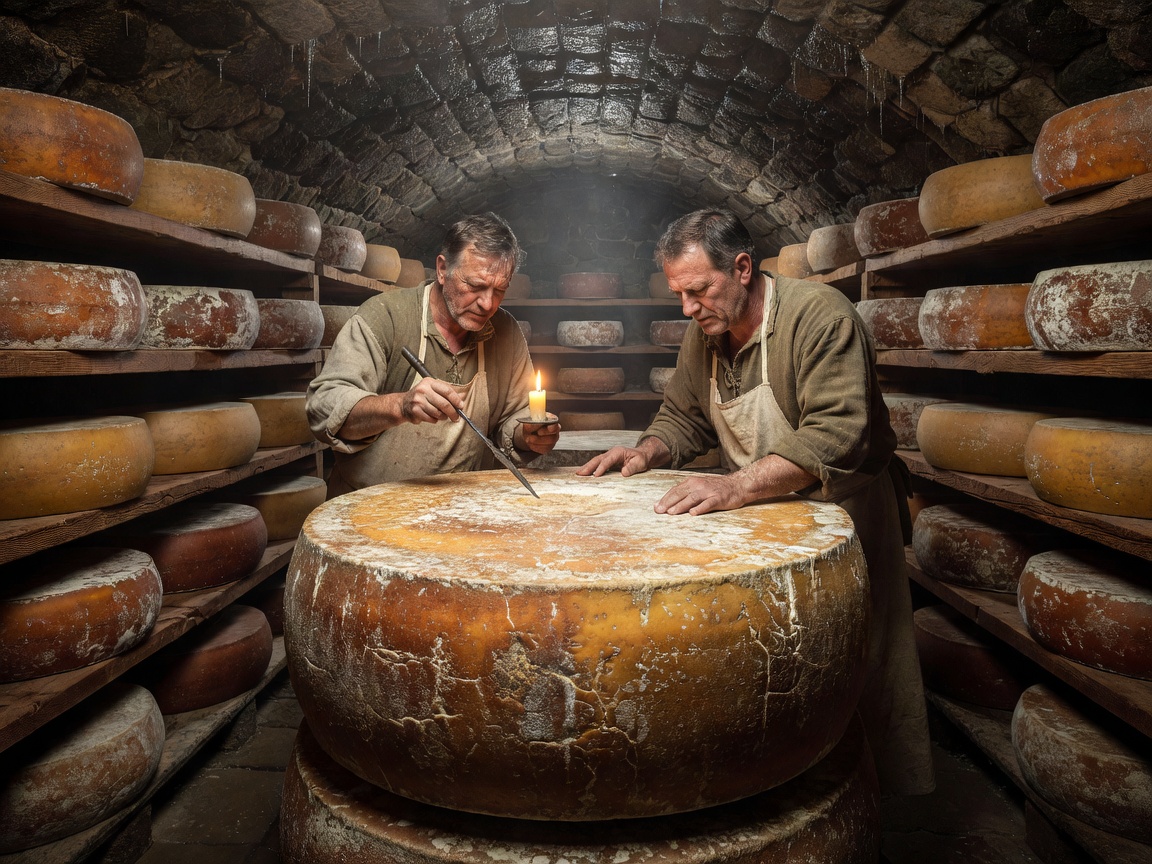
Prepare before moving
Confirm the batch identity, shelf position, planned action and handling requirement before opening a route. A clear sequence reduces searching and prevents a wheel from being placed in the wrong location. Use suitable protective equipment and approved hygiene procedures where the operation requires them.
Turning schedules
Turning frequency and method depend on the cheese, surface, form and producer instruction. A schedule should state what is expected, who performs it and what must be recorded. It should not be copied from an unrelated product. If the schedule changes, record the reason and approval.
Surface observation
Observation can include visible surface condition, damage, unusual moisture, packaging state or other defined indicators. Use the approved vocabulary for the operation. Avoid unsupported diagnosis. A notable observation should trigger the documented review route, not an improvised treatment.
Contamination awareness
Keep tools, surfaces, gloves and movement routes aligned with the site’s hygiene procedure. Separate product and exception handling where required. Do not move a questionable batch through an active route without following the responsible food-safety process.
Handling records
A concise record can show date, operator, batch, previous position, new position, action, observation and follow-up. Records are most useful when completed at the point of work. They create continuity between the cellar, monitoring log and release plan.
- Verify identity before contact.
- Use the approved handling and hygiene procedure.
- Minimize unnecessary movement.
- Record position changes immediately.
- Escalate unusual observations.
See storage organization, condition records or batch scheduling.