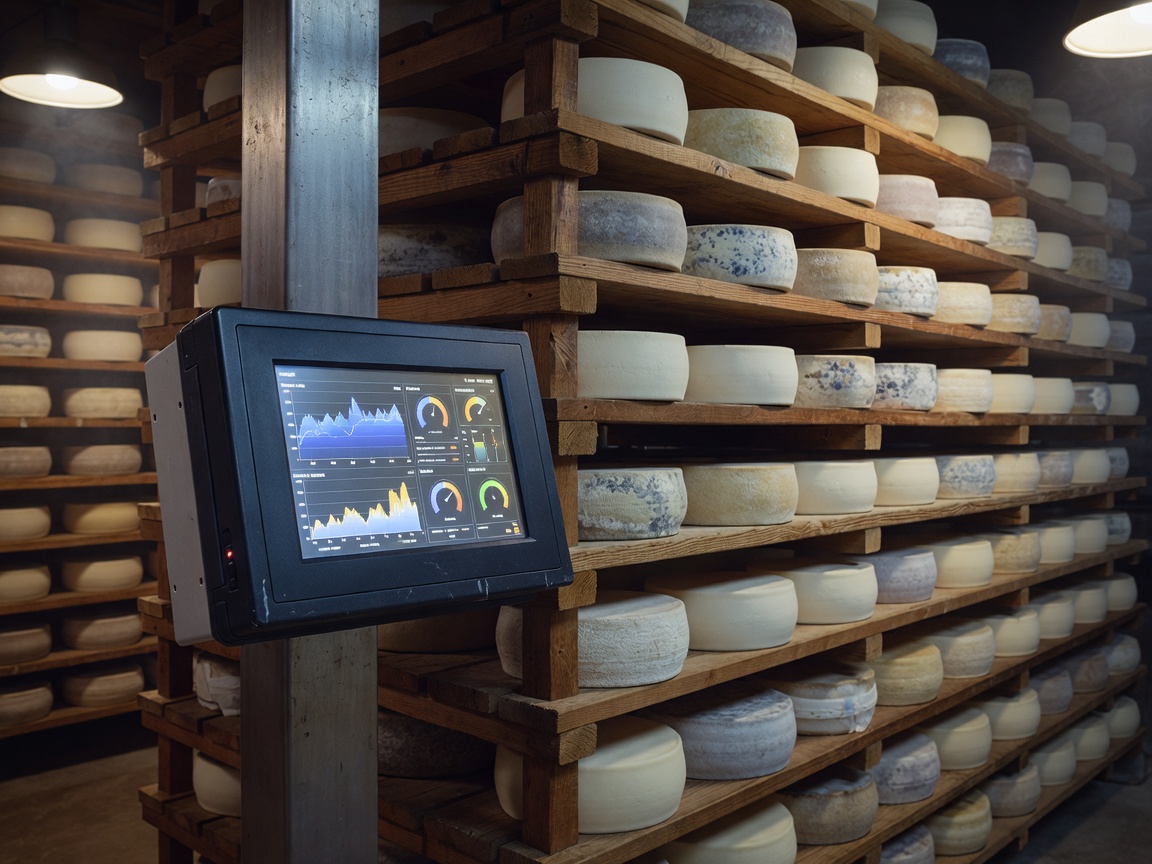
Measure the room, not just the device
Sensor placement should represent the areas that matter: loaded shelves, access points, likely cold or warm zones and locations affected by equipment or doors. Placement should be documented so records retain context. A sensor hidden behind product cannot represent the same condition as one in open air.
Records and trends
A useful record includes date, time, location, reading, responsible review and any action. Trend monitoring can reveal gradual drift, repeated door-related changes or differences between zones. It can also show when a reading is incomplete. Missing data should be marked, not silently replaced.
Temperature and humidity requirements vary by cheese type. Use the producer’s specification and qualified food-safety guidance. This page does not provide universal targets or guarantees.
Alarm concepts
An alarm should have a defined threshold, recipient, response time and escalation route. A notification without an operator procedure creates noise rather than control. The response should consider whether the reading is genuine, whether other locations show the same change and whether product records require an exception note.
Calibration and data retention
Monitoring equipment requires a documented review and calibration approach suitable for its use. Follow the equipment instructions and qualified technical advice. Do not alter electrical equipment without appropriate competence and authorization.
Retain records for the period required by the operating system, customer agreement or applicable jurisdiction. Protect them from casual editing. Keep a clear link between a condition event and the batches potentially affected.
Anomaly review
- Check time, location and device identity.
- Compare nearby readings and room activity.
- Record the observation and immediate action.
- Escalate according to the documented procedure.
- Close the event only when the review is attributable.
Related pages: environment design, handling records and batch planning.