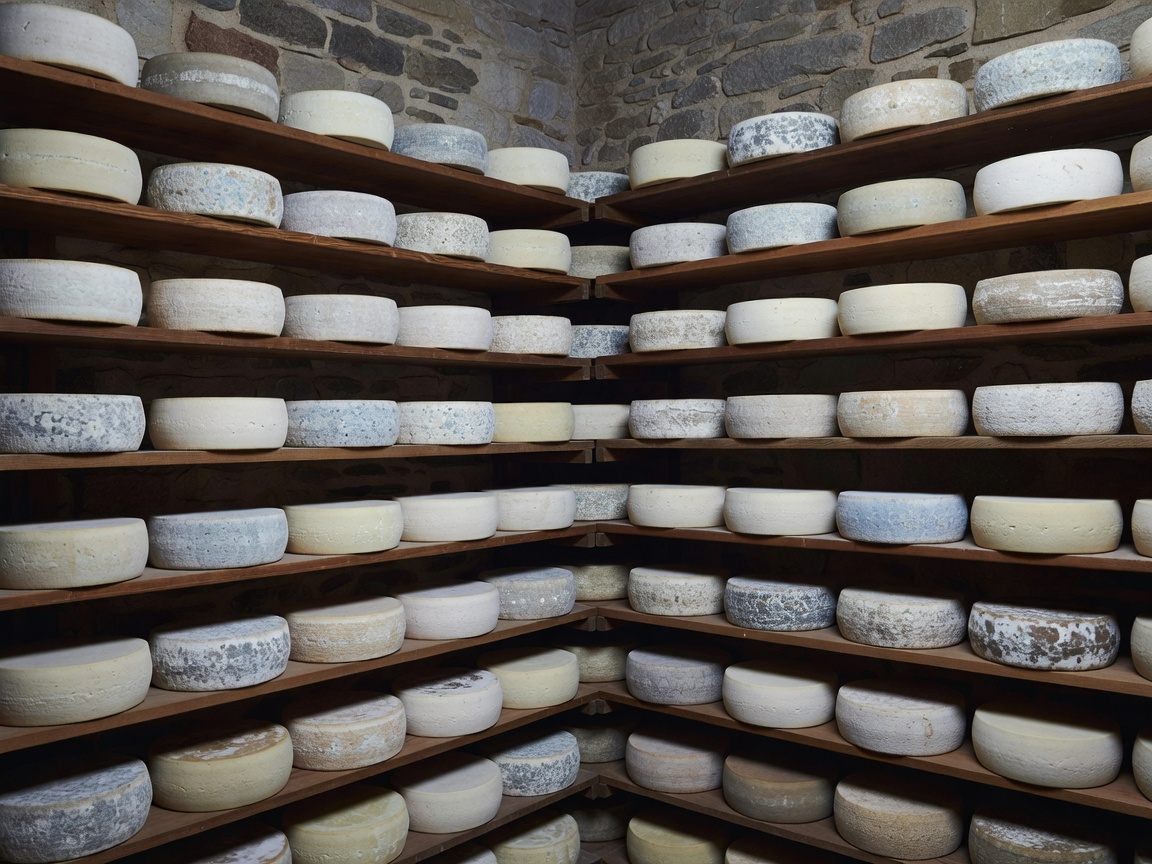
Cellar or controlled room
Traditional cellars can provide useful thermal mass, restrained light and distinctive surfaces. Controlled maturation rooms can offer more direct adjustment and clearer zoning. Neither option is automatically suitable. The decision depends on the cheese, the building, the operating method and qualified food-safety advice.
Stability matters more than a single reading
A room should be assessed across time and across locations. Door opening, seasonal conditions, equipment cycles, shelf loading and nearby surfaces can create local variation. A single reading cannot describe the entire environment. Trend records and repeated observations provide more useful context.
Exact temperature and relative humidity requirements vary by cheese type and producer specification. They should not be generalized from one product to another. Humidity awareness includes condensation, excessive drying and changes at the product surface.
Airflow and surfaces
Air movement should support the documented maturation process without creating avoidable drying or stagnant pockets. Shelf spacing, wall clearance and loading pattern affect the route. Do not use fans or equipment as a substitute for a designed and maintained room.
Walls, floors, doors and shelving require a maintenance plan. Surfaces should be compatible with cleaning procedures and inspected for damage, moisture accumulation and inaccessible dirt. Natural materials may have a role, but their use must fit the approved process.
Room zoning
Separate receiving, active maturation, inspection, exception and release-planning activities where the layout allows. Zoning makes movement easier to document and reduces accidental mixing of batches. It also gives operators a defined response when a condition or surface observation needs review.
Environment review checklist
- Map room locations and likely variation.
- Check surfaces, shelves and access routes.
- Document the approved product requirements.
- Review condensation and airflow observations.
- Schedule maintenance before defects become operational issues.
Continue with monitoring, storage organization or contact the team.